

Digital Media Buying and Planning: A Comprehensive Guide to Successful Campaigns
In today’s fast-evolving digital landscape, businesses must be strategic about how they allocate their marketing budgets. Digital Media Buying and Planning play a pivotal role in ensuring that marketing efforts are effective and yield high returns. By leveraging data, technology, and the expertise of digital media professionals, brands can reach the right audiences, maximize visibility, and optimize advertising campaigns across various digital platforms.
This article will explore the key concepts of Digital Media Buying and Planning, their importance, and best practices for businesses looking to enhance their digital marketing strategies. Additionally, we’ll delve into how businesses can optimize their campaigns and measure their effectiveness.
What is Digital Media Buying and Planning?
Digital Media Buying and Planning refer to the process of strategizing, purchasing, and managing online advertising efforts across various digital channels. These channels can include social media platforms, search engines, display networks, mobile apps, video platforms, and more.
The goal of digital media buying and planning is to reach the right audience at the right time, with the right message, while managing costs effectively. It involves a thorough understanding of the target audience, market trends, ad formats, and platform algorithms. Digital media planners and buyers must also track and analyze campaign performance to continuously optimize the strategy.
Key Components of Digital Media Buying and Planning
Effective digital media buying and planning consist of several crucial components, each of which contributes to a brand’s overall marketing success:
1. Audience Research and Targeting
Before purchasing media, digital media planners conduct in-depth audience research. Understanding who the target audience is, their behavior, preferences, and purchasing habits is crucial for crafting effective campaigns. The insights gained from audience research guide the selection of platforms, content, and messaging.
For example, a business selling fitness products would target health-conscious consumers on platforms like Instagram or YouTube, where fitness content thrives. Detailed targeting options on platforms like Facebook or Google Ads allow businesses to refine their audience further by factors such as age, gender, location, interests, and even online behavior.
2. Budget Allocation and Strategy
Digital media buying is highly cost-sensitive, and optimizing a campaign’s budget is key to achieving the best results. Media planning services involve careful budget allocation across different channels to maximize reach and engagement while staying within the company’s marketing budget.
A typical digital media buying strategy involves deciding how much to allocate to each platform (Facebook, Google Ads, Instagram, etc.) and determining the optimal bid strategy (e.g., cost-per-click, cost-per-impression). The planning process also includes forecasting potential outcomes and ensuring the campaign delivers a positive return on investment (ROI).
3. Ad Creative and Content
The creative aspect of digital media buying involves developing compelling ad copy, visuals, and video content. Effective creative content is tailored to resonate with the target audience while aligning with the platform’s guidelines and best practices.
For instance, a video ad on YouTube might have a more storytelling format, while display ads on a website should focus on a clear call-to-action and eye-catching imagery. The content should also be optimized for each platform, as what works on Facebook may not be as effective on LinkedIn or TikTok.
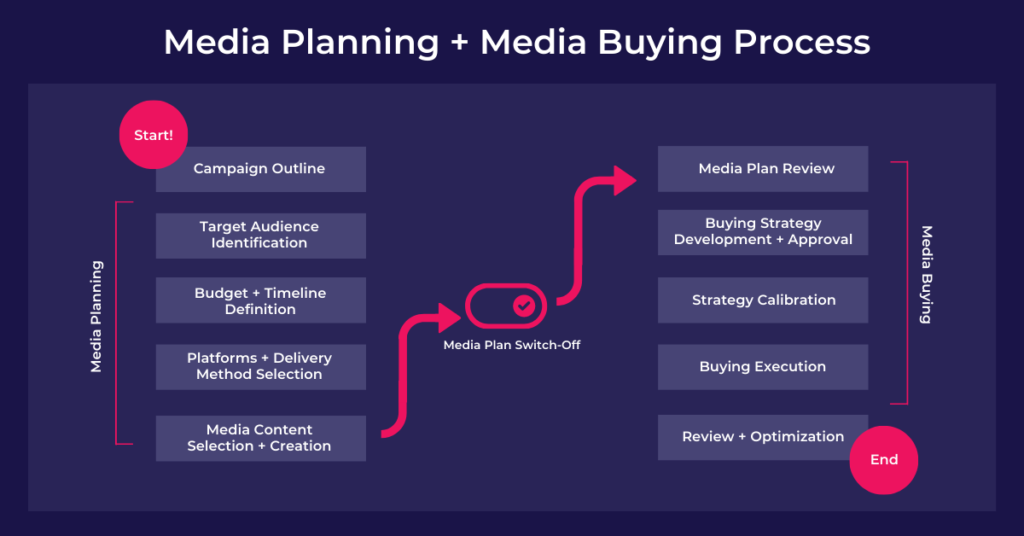
4. Platform Selection and Placement
The next step in the digital media planning process is choosing the right platforms for placing ads. Different platforms have unique features and target audiences, and selecting the right ones is crucial to campaign success.
Common platforms for digital media buying include:
- Google Ads: For search engine marketing, display ads, and YouTube video ads.
- Facebook and Instagram Ads: For targeted advertising across social networks.
- LinkedIn Ads: For B2B marketing and professional targeting.
- TikTok Ads: For engaging younger audiences with creative video content.
- Programmatic Advertising: Automated ad buying using real-time data to place ads across various digital properties.
Each platform offers unique targeting capabilities, such as interest-based targeting on social media or demographic targeting on Google Ads.
5. Campaign Execution and Optimization
Once the campaign is live, continuous monitoring and optimization are essential. This includes tracking key performance metrics such as impressions, click-through rates (CTR), conversion rates, and cost-per-acquisition (CPA). Optimization is done by adjusting the targeting, creative, bidding, or budget based on the performance data.
Real-time analytics tools, such as Google Analytics and Facebook Ads Manager, allow digital media buyers to make data-driven decisions and ensure campaigns are always aligned with the set objectives.
6. Measurement and Reporting
After the campaign ends, measuring its success is crucial to understanding the effectiveness of digital media buying efforts. Marketers need to track key performance indicators (KPIs) like:
- Impressions: The number of times an ad is displayed.
- CTR: The percentage of people who click on an ad.
- Conversion Rate: The percentage of people who complete a desired action, such as making a purchase.
- ROI: The overall return on the marketing investment.
Digital media buyers generate detailed reports to analyze how well the campaign performed against set objectives. These insights help inform future campaigns and refine media buying strategies for continuous improvement.
Benefits of Digital Media Buying and Planning
- Precise Targeting: Digital media allows for highly specific audience targeting based on demographics, interests, location, and behaviors. This helps businesses focus their ad spend on the most relevant and qualified audience, maximizing the potential for conversions.
- Cost-Effective: Digital media buying is more affordable than traditional media channels like television or print. By using performance-based pricing models such as pay-per-click (PPC) or cost-per-impression (CPI), brands can control their budgets and get the most value out of every dollar spent.
- Real-Time Data and Analytics: With digital media buying, marketers have access to real-time data, enabling them to track campaign performance, make quick adjustments, and optimize results. This data-driven approach ensures that the campaign is always aligned with business goals.
- Scalability: Digital media buying allows brands to scale their campaigns quickly. Once an effective strategy is identified, campaigns can be expanded or adjusted to reach a larger audience or explore new platforms.
- Enhanced Brand Visibility: Digital media buying helps businesses increase their online visibility, whether through search ads, social media promotions, or display ads. This increased exposure can lead to higher brand recognition, improved customer trust, and better conversion rates.
Using Digital to Drive Thought Leadership Agenda
Best Practices for Digital Media Buying and Planning
- Start with Clear Objectives: Before diving into the digital media buying process, it’s essential to define clear objectives. What do you want to achieve from your campaigns—brand awareness, lead generation, sales conversion, etc.? Your objectives will guide every aspect of the planning process.
- Test and Iterate: Don’t rely on a “set it and forget it” approach. Continuous A/B testing of ad creatives, copy, and targeting will help refine your approach and ensure better performance over time.
- Monitor Trends: Stay updated on the latest digital advertising trends and platform updates. Social media algorithms and advertising policies can change frequently, and being aware of these changes ensures that your strategies remain effective.
- Focus on Mobile Optimization: With mobile devices accounting for a large portion of digital media consumption, ensure that all ads, landing pages, and content are optimized for mobile users.
Conclusion
Digital Media Buying and Planning are essential components of any modern marketing strategy. By leveraging the power of digital platforms and precise targeting, businesses can reach their desired audiences more effectively and efficiently. However, successful digital media buying requires careful planning, continuous optimization, and a data-driven approach to ensure maximum return on investment.
Whether you’re a small business looking to build brand awareness or a large enterprise aiming to drive conversions, the right digital media buying strategy can significantly impact your success. Working with experienced digital media planners and buyers can help you navigate the complexities of the digital world, optimize your campaigns, and achieve measurable results.
This article incorporates keyword optimization and follows best practices for on-page SEO, structured data, and content depth to ensure it is optimized for search engine rankings. Regular updates and monitoring of keyword performance are essential to keep the content relevant and effective in an ever-changing digital landscape.