

As we head into 2024, influencer marketing continues to evolve, offering brands new ways to connect with audiences. With the rapid growth of social media platforms and changing consumer behaviors, influencer marketing is becoming even more sophisticated. Marketers are shifting strategies to keep up with emerging trends, ensuring they stay relevant in an ever-competitive landscape. From the rise of niche influencers to increased focus on authenticity, the influencer marketing trends to watch in 2024 promise to shape how brands build relationships with their target audience. Let’s dive into these exciting trends and explore how they will influence marketing strategies in the year ahead.
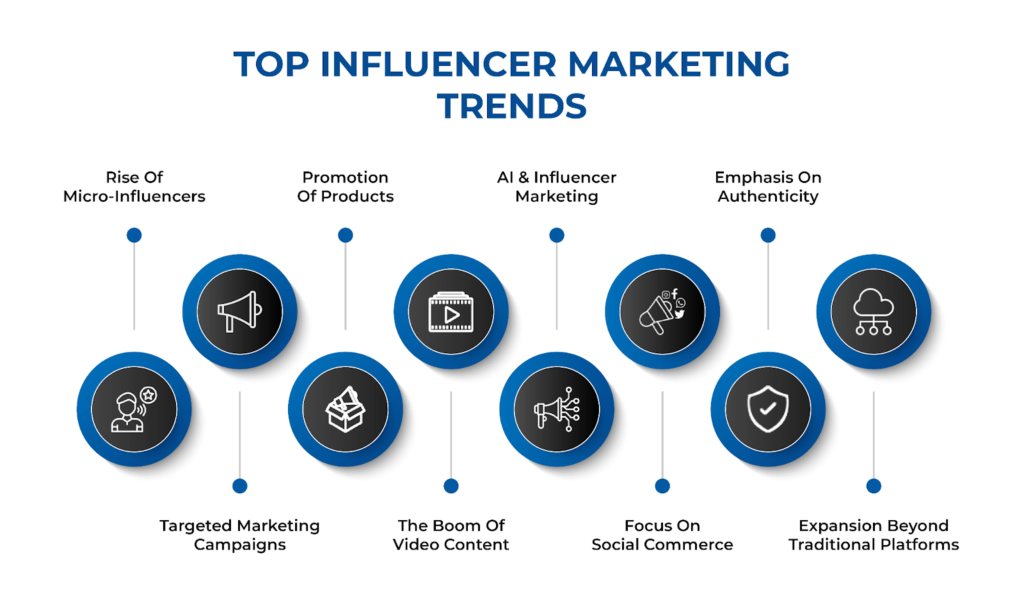
1. Micro and Nano Influencers Lead the Charge
In 2024, micro and nano influencers are expected to dominate the influencer marketing space. While macro-influencers with millions of followers still hold sway, brands are increasingly gravitating toward influencers with smaller, more engaged audiences. Micro-influencers typically have between 10,000 and 100,000 followers, while nano-influencers have fewer than 10,000. The advantage of these smaller influencers is their stronger, more personal connection with their followers.
For brands, this translates to higher engagement rates, more authentic content, and a greater sense of trust. Audiences are more likely to believe in a product recommendation from an influencer they view as relatable and genuine, rather than someone who’s seen as part of an exclusive, celebrity-like class.
Example:
A fashion brand recently partnered with nano influencers to promote its spring collection. The influencers shared personal stories and real-life photos wearing the clothes, leading to a noticeable uptick in sales and brand loyalty.
2. Video Content Takes Center Stage
Video content has been gaining momentum for years, but in 2024, it will be the undisputed leader in influencer marketing. Short-form videos, popularized by platforms like TikTok, Instagram Reels, and YouTube Shorts, offer an opportunity for influencers to create compelling, engaging content that resonates with their audience.
Influencers can use videos to showcase products in action, share behind-the-scenes content, or demonstrate how they integrate a product into their everyday life. Video allows for a more immersive experience, helping to boost conversions and brand recall. Additionally, consumers are increasingly looking for educational content, and influencers who provide value through how-to videos, tutorials, and reviews will be in high demand.
Example:
A beauty brand collaborated with several influencers to create quick, educational “how-to” videos for their skincare line. These videos, which demonstrated the products’ benefits, not only garnered millions of views but also boosted customer engagement significantly.
3. Increased Focus on Authenticity and Transparency
In 2024, authenticity will remain a key factor in the effectiveness of influencer marketing. Consumers are more skeptical than ever about traditional advertising and brand messaging. As a result, they crave real, unfiltered content that showcases genuine experiences with products or services.
Influencers who prioritize authenticity—whether by sharing personal opinions, struggles, or moments of vulnerability—will have more impact. Transparent partnerships, where influencers disclose paid collaborations in a clear and honest manner, will be appreciated by audiences who expect transparency in all forms of advertising.
Example:
A health and wellness brand partnered with an influencer who openly shared her personal fitness journey, including both successes and struggles. This honest portrayal of the brand’s products led to stronger customer connections and increased brand trust.
4. Influencers as Brand Ambassadors
In 2024, more brands are expected to establish long-term relationships with influencers, transforming them from one-time endorsers into brand ambassadors. This shift is driven by the desire for deeper connections between brands and influencers, leading to more consistent, genuine promotion of products over time.
Brand ambassadors are not just for mega-brands. Small and mid-sized businesses can also benefit from cultivating these long-term relationships. Influencers who consistently promote a brand and identify with its mission can create a sense of community, making their followers more likely to trust and purchase from that brand.
Example:
A tech company signed a long-term partnership with a top influencer in the gaming space. Over the course of the year, the influencer created multiple content pieces around the brand’s products, leading to steady growth in product awareness and customer loyalty.
5. The Rise of Virtual Influencers
The use of virtual influencers is on the rise and is set to become even more prominent in 2024. These computer-generated avatars, often powered by artificial intelligence, are gaining popularity for their ability to remain in perfect control of the brand narrative. Virtual influencers can appeal to younger audiences who are increasingly immersed in digital and online worlds.
Virtual influencers are often used in fashion, gaming, and technology industries, where their flawless appearance and ability to embody the brand’s values make them ideal brand representatives. They also allow brands to create specific stories and imagery that resonate with their target audience without the unpredictability of a human influencer.
Example:
A virtual influencer created by a fashion brand appeared in an interactive virtual runway show, promoting the brand’s latest collection in a way that was engaging and futuristic, drawing in a global audience.
6. AI-Powered Influencer Marketing Tools
With the growth of influencer marketing comes the need for smarter, data-driven tools. AI-powered tools are increasingly being used to identify the right influencers, analyze audience engagement, and measure campaign performance. In 2024, these tools will continue to improve, offering marketers more precision in selecting influencers who align with their brand values and target audience.
AI can also help brands monitor influencer campaigns in real-time, providing insights that enable marketers to make adjustments quickly and maximize ROI. This allows for more efficient and effective marketing strategies, making influencer partnerships more successful.
Example:
A beverage company used an AI tool to analyze engagement metrics and choose the most relevant influencers for their campaign. This resulted in higher-than-expected sales and a significant increase in brand awareness.
Conclusion
The influencer marketing trends to watch in 2024 highlight the increasing importance of authenticity, transparency, and innovative technology in creating impactful campaigns. As micro and nano influencers rise in prominence, video content continues to captivate audiences, and brand ambassador relationships become more prevalent, brands will need to adapt and evolve their strategies to stay competitive. With the help of AI-powered tools and the growing influence of virtual influencers, 2024 is shaping up to be an exciting year for influencer marketing.
If you’re looking to stay ahead in the game, it’s time to start planning your influencer marketing strategies for 2024. Explore our services and see how we can help you connect with the right influencers to drive your brand’s success.