

Understanding the Key Differences
In the world of marketing and communications, Public Relations (PR) and Advertising are two key strategies that businesses use to promote their brand, manage their reputation, and reach a wider audience. While both are essential to a company’s marketing mix, they have distinct approaches, goals, and methods. Understanding the differences between PR and advertising is crucial for businesses to maximize their resources and create the most effective communication strategies.
In this article, we’ll explore the key differences between PR and advertising, how they work, and how they can complement each other to drive brand success.
What is Public Relations (PR)?
Public Relations (PR) is the strategic practice of managing a company’s reputation, building relationships with key stakeholders, and enhancing public perception through earned media. Unlike advertising, PR relies on media coverage and third-party endorsements rather than paid promotions to communicate a brand’s message. PR strategies focus on fostering goodwill with the public, investors, employees, customers, and the media.
The goal of PR is to create a positive image of the brand through various channels, including press releases, media interviews, community events, influencer collaborations, and social media management. PR professionals often work on crisis management, reputation management, and long-term brand storytelling.
Key Characteristics of PR:
- Earned Media: PR focuses on gaining media coverage through press releases, media relations, and influencers, without directly paying for it.
- Long-Term Relationships: PR is built on cultivating lasting relationships with media outlets, the public, and other stakeholders.
- Reputation Management: PR professionals often handle a company’s image and manage how it’s perceived by the public, particularly during times of crisis or controversy.
- Credibility: PR is often perceived as more credible than advertising because it involves third-party validation through news stories or influencer endorsements.
What is Advertising?
Advertising, on the other hand, is the paid promotion of products, services, or brands through various channels. It involves creating content that is designed to persuade an audience to take a specific action, such as purchasing a product, signing up for a service, or visiting a website. Advertising can be done through traditional media channels like TV, radio, and print, as well as digital channels such as social media, display ads, and search engine marketing.
Unlike PR, which relies on earned media, advertising involves direct payment to media outlets or platforms to place promotional content. This gives brands more control over the message, timing, and placement. Advertising is often focused on short-term goals such as boosting sales, increasing brand awareness, or launching new products.
Key Characteristics of Advertising:
- Paid Media: Advertising requires companies to pay for placement on TV, social media platforms, search engines, print media, and other channels.
- Control Over Message: Advertisers have complete control over the messaging, design, and delivery of the content.
- Targeted Reach: Advertising allows for precise targeting of audiences based on demographics, behaviors, and interests.
- Short-Term Focus: Advertising campaigns are often created with a specific goal in mind, such as increasing sales or driving traffic within a set timeframe.
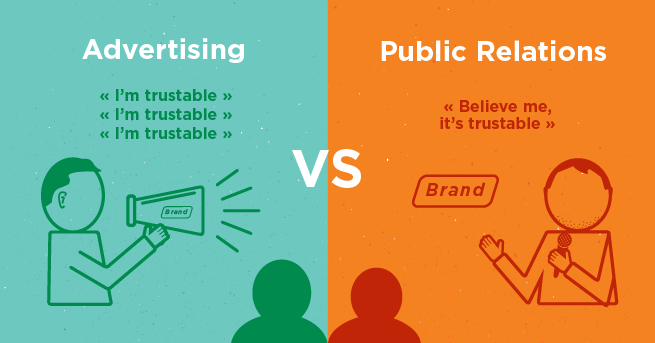
Key Differences Between PR and Advertising
Although both PR and advertising play a crucial role in a brand’s overall marketing strategy, there are several key differences that set them apart. Let’s break them down:
1. Cost and Control
One of the most significant differences between PR and advertising is the cost. Advertising is a paid media strategy, which means brands pay for every advertisement that appears on TV, radio, or social media. In contrast, PR is based on earned media, meaning brands don’t pay for media placements. Instead, they rely on journalists, influencers, or media outlets to cover their stories.
While advertising gives brands more control over the messaging, PR is less predictable and often depends on external factors, such as media interest or the public’s perception.
2. Message Ownership
In advertising, companies have complete control over the messaging, ensuring that their content is tailored to meet their specific goals. With PR, the message is often filtered through the media, which can alter how the story is presented. PR professionals work to craft compelling narratives that attract media attention, but once the story is picked up, the media outlet may spin it differently.
3. Reach and Credibility
Advertising has the potential to reach a large, targeted audience quickly, especially with the rise of digital advertising and social media platforms. However, it can sometimes be viewed with skepticism by consumers, who are aware that ads are created with the intention of selling something.
PR, on the other hand, relies on third-party validation, such as media coverage or influencer endorsements, to communicate a brand’s message. This often gives PR campaigns more credibility, as audiences tend to trust third-party sources over direct advertisements. PR also has the advantage of building long-term relationships with the public, which can lead to sustained positive perceptions of the brand.
4. Objectives and Timeline
The goals of PR and advertising are often different. PR is focused on long-term relationship-building, managing the brand’s reputation, and fostering a positive image. It’s a more strategic, ongoing effort that focuses on maintaining goodwill with key stakeholders.
Advertising, in contrast, is often aimed at achieving short-term objectives, such as boosting sales, increasing website traffic, or launching a new product. Advertising campaigns typically have a defined start and end date, with measurable outcomes tied to the campaign’s performance.
5. Tactics and Channels
PR professionals use a variety of tactics, including media outreach, press releases, social media engagement, event planning, and crisis management. The channels for PR are often earned and organic, such as media outlets, influencers, and public events.
Advertising, on the other hand, relies heavily on paid media placements across TV, radio, print, digital ads, and social media platforms. Advertisers may also use search engine marketing (SEM), display ads, or direct mail campaigns to target specific audiences.
How PR and Advertising Work Together
While PR and advertising are distinct strategies, they can complement each other when used together effectively. By integrating PR and advertising efforts, businesses can amplify their brand’s reach and message.
For example, a brand can use advertising to promote a new product and drive immediate sales, while simultaneously using PR to generate media coverage and build long-term credibility for the product. The combination of paid media and earned media creates a well-rounded marketing strategy that ensures maximum visibility and impact.
Choosing the Right Digital Marketing Agency
Conclusion
In summary, both Public Relations (PR) and Advertising are essential tools in a brand’s marketing strategy, but they differ in their approach, cost, message ownership, and goals. PR focuses on reputation management and building long-term relationships through earned media, while advertising involves paid promotions aimed at short-term goals such as increasing sales or driving traffic.
By understanding the differences between PR and advertising, brands can make informed decisions about which strategies to use based on their objectives and available resources. When used together, PR and advertising can create a powerful and comprehensive marketing strategy that drives brand awareness, builds trust, and delivers results.
By leveraging both approaches, marketers can ensure they are effectively reaching their audience, creating meaningful connections, and achieving sustainable success.